What to Ask Before Deciding Which Roofer to Hire
Hiring the right professional to work on your roof is an important decision. Whether you need a few damaged shingles replaced, help tracking down a leak, or an entirely new roofing system, the quality of the work can affect your home for years. Comparing roofers based only on price can make it easy to overlook important differences in experience, warranties, communication, and workmanship.
Before signing a contract, take time to speak with potential contractors and ask detailed questions about how they operate. A reputable roofing professional should be willing to explain the process and provide the information you need to make an informed decision.
Are You Licensed and Insured?
One of the first questions to ask is whether the contractor carries the licenses and insurance required in your area. Requirements can vary by state and local jurisdiction, so homeowners should understand what applies where they live.
Insurance is particularly important. Roofing involves working at significant heights and moving heavy materials around your property. Ask whether the company carries appropriate liability coverage and workers’ compensation insurance. You may also request documentation rather than relying solely on a verbal assurance.
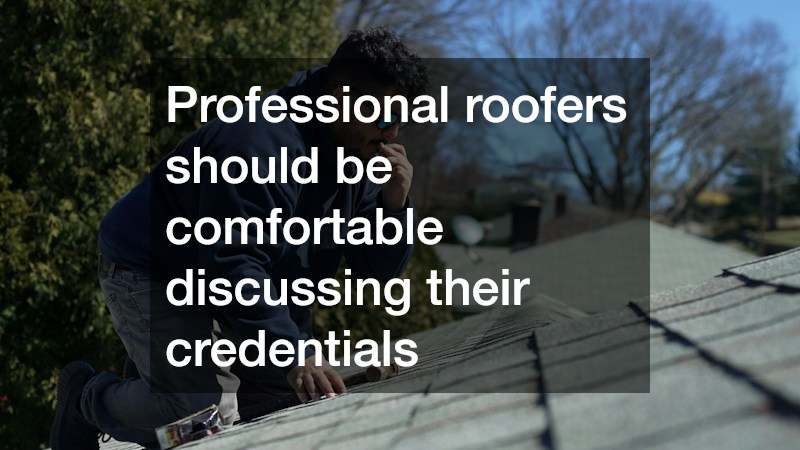
Professional roofers should be comfortable discussing their credentials and explaining how their insurance protects both their employees and the homeowner.
How Much Experience Do You Have?
A company may have attractive pricing, but experience can make a substantial difference in the quality of a roofing project. Ask how long the business has been operating and how much experience its team has with the specific type of roof on your home.
Different materials can require different installation techniques. Asphalt shingles, metal roofing, slate, tile, and flat roofing systems all have unique characteristics. A contractor who frequently installs your chosen material may be better prepared to recognize potential complications before they become expensive problems.
You can also ask roofers how many similar projects they have completed recently and whether they can provide examples of past work.
Can You Provide References or Reviews?
Customer feedback provides valuable insight into what it is actually like to work with a company. Ask for references from previous customers, particularly homeowners who had roofing projects similar to yours.
Online reviews can also be helpful, but look beyond the company’s overall rating. Read individual reviews and watch for patterns related to communication, scheduling, cleanliness, unexpected charges, and warranty service.
A few negative reviews are not necessarily a reason to eliminate a contractor. Instead, consider how the business responded and whether the complaint appears to have been resolved professionally.
What Does the Estimate Include?
Roofing estimates should contain more information than a single total price. Ask the contractor to explain exactly what is included in the quote.
The estimate may address labor, roofing materials, underlayment, flashing, ventilation components, permits, disposal costs, and cleanup. Understanding these details makes it easier to compare bids fairly.
Two roofers may provide estimates that are thousands of dollars apart because they are proposing different materials or scopes of work. The cheapest quote is not automatically the best deal if important components are excluded.
Ask what circumstances could also cause the final cost to increase. For example, damaged roof decking sometimes cannot be discovered until existing roofing materials are removed.
What Materials Do You Recommend?
There can be major differences between roofing products, even within the same general category. Ask which manufacturers and product lines the contractor recommends and why.
Consider factors such as expected lifespan, weather resistance, appearance, maintenance requirements, and manufacturer warranties. A knowledgeable professional should be able to explain the advantages and disadvantages of different options without automatically steering you toward the most expensive one.
It is also worth asking whether the contractor has specific certifications or training from the manufacturer of the roofing system being installed.
Who Will Actually Complete the Work?
The person providing your estimate may not be the person working on your roof. Ask whether the company uses its own employees, subcontractors, or a combination of both.
You should also determine who will supervise the project and who your primary contact will be if you have questions. Reliable roofers should have a clear system for communicating project updates and addressing concerns.
Knowing who is responsible for the job can prevent confusion once work begins.
How Long Will the Project Take?
Ask for an estimated start date and expected project duration. Roofing schedules can be affected by weather, material availability, and other projects, so exact dates are not always possible.
However, the contractor should still be able to provide a realistic timeline.
Ask what will happen if bad weather occurs while the roof is partially exposed. Professionals should have procedures for protecting the structure from rain and other conditions during construction.
You may also want to ask how the crew will protect landscaping, siding, windows, driveways, and outdoor furniture while work is underway.
What Warranties Are Included?
Roofing projects can include more than one type of warranty. Manufacturers may offer warranties covering their products, while contractors may provide separate workmanship guarantees covering installation.
Ask exactly what each warranty includes, how long coverage lasts, and what could potentially void it.
Some homeowners assume a long manufacturer’s warranty automatically covers installation problems, but that is not always the case. Understanding the difference before choosing between roofers can help you evaluate the true long-term value of each proposal.
How Will Cleanup Be Handled?
Replacing a roof creates significant debris. Old shingles, nails, packaging, flashing, and other materials need to be removed safely.
Ask whether cleanup and disposal are included in the estimate. Contractors may use dumpsters, trailers, magnetic nail sweepers, and other equipment to keep the property clean.
It is also a good idea to ask what happens if landscaping, siding, gutters, or other parts of your property are accidentally damaged during the project.
Make Your Decision Based on More Than Price
Price matters, but it should be only one part of your decision. Licensing, insurance, experience, communication, materials, warranty protection, and the quality of the written estimate are equally important considerations.
Take time to speak with several roofers before making your selection. Asking detailed questions allows you to compare companies based on what they actually provide rather than simply choosing the lowest bid.
A roof is one of your home’s most important protective systems. Choosing a contractor who communicates clearly, stands behind their work, and provides a detailed plan can give you greater confidence that your investment will protect your property for years to come.